Friday, December 15, 2006

In the Ghetto

Here's an interesting take on virtualization; it's the new ghetto in the data center, as more and more servers are crammed onto a single piece of hardware to cut costs. Robert Mitchell, the author, doesn't think it's such a great idea:

It wasn't supposed to be that way. Management, troubled by server utilitization rates in the range of 10%, was delighted to discover virtualization as a way to get more out of existing hardware. Some organizations have begun cost saving initiatives that require all new applications to reside in virtual machines unless a business case can be made to break policy. Unfortunately, the temptation for some overzealous bean counters is to put too many applications on each physical server.


Ok, there could be a tendency to load a virtual server up to the breaking point. But 10 percent? Come on, we are talking about massive waste here, the equivalent of driving a tank to the 7-11 to get a quart of milk. Typically, 40 percent is about the figure where the hardware people start getting queasy anyway; nevertheless, I challenge anyone to draw me a parallel where you buy a piece of equipment and baby it in this manner. Mitchell concludes that "Such determinations can't always be made purely on a technical basis.", but I have to disagree. You benchmark, weight the options, and allocate the timeslices to the applications. It's a numbers game, and the numbers can be way better than they are now.
The Wood Thing

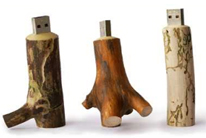
If you are desparate for those green geeky gifts, try the twiggy thumb drive from Guido Oooms. Starting at 79 Euros, it's not the cheapest thing out there, but it's the thought that counts.

Two Sawbucks

That's the price of your new IT infrastructure, after Google announces that they will be hosting domains. Once again, Nick Carr has a great wrtite up on this:

In some ways, the traditional vendors seem to be going about their business in traditional ways, selling lots of gear and software licenses and maintenance contracts, pushing upgrades and service agreements - and making a pretty penny off all of it. And yet the entire enterprise seems increasingly unreal. Watching the IT business today feels kind of like watching one of those Roadrunner cartoons when Wile E. Coyote would race off a cliff and manage to tread air for a few long seconds, his legs moving in a blur, his mind not quite registering the fact that the ground had disappeared from beneath him.


Couldn't agree more, it's Old King Cole running around in his birthday suit. Except, it's like there is thousands of kings running around, IT folks who are keeping the smoke and mirrors going. What are they so afraid of? Let Google do the grunt work; you can reallocate your staff to the innovative fun stuff, like solar data centers.

Thursday, December 14, 2006

The Power Octopus

You know when you have eight different things plugged into a single wall outlet? That's called an octopus. It seems like these days in IT everyone is pointing at their own energy octopus and wondering how to solve the problem. Treehugger has had it with screen savers and phantom power. Worldchanging is taking on servers, and Gomeler is concentrating on the boards themselves. Some even are concerned about our power usage and health. It's pretty clear that some folks are sick of talking about it, and are hungry for action.

Here's my advice; follow the old adage of reduce, reuse,recycle. With about 80 percent of the total energy used going into just making the computer, and most machines being capable of being used for six years, that will make quite a dent. For starters.

A No Brainer

President Bush is about to sign a bill into law to promote the use of energy efficient servers in the United States. The bill also provides for the EPA to have a good hard look at data centers and what can be done to cut their energy consumption.

The bill passed the house 417 to 4; the Senate voted unanimously. We are going to see at lot more this this, lawmakers doing what they do best - make laws. I think a round of applause is in order!

Monday, December 11, 2006

At the Bridge

Just letting you all know that I am in San Francisco until mid-week. Will resume regular posting after that!

Friday, December 08, 2006

Virutal Slaves in Virtual Worlds

Nick Carr has another insightful piece on the fact that Second Life avatars use as much power as the typical Brazilian. The analysis is fascinating:

If there are on average between 10,000 and 15,000 avatars "living" in Second Life at any point, that means the world has a population of about 12,500. Supporting those 12,500 avatars requires 4,000 servers as well as the 12,500 PCs the avatars' physical alter egos are using. Conservatively, a PC consumes 120 watts and a server consumes 200 watts. Throw in another 50 watts per server for data-center air conditioning. So, on a daily basis, overall Second Life power consumption equals:

(4,000 x 250 x 24) + (12,500 x 120 x 24) = 60,000,000 watt-hours or 60,000 kilowatt-hours

Per capita, that's:

60,000 / 12,500 = 4.8 kWh

There's something a little mysterious about these avatars, these virtual avatar/people. As I pointed out in Do My Bidding, we Americans already have about 100 energy slaves working for us already on a daily basis. I see avatars as just another appliance working for us, like a toaster or a refrigerator, giving us a bit of fun or maybe even making some money. But when it gets down to it, when energy is one dollar per kWh, are we going to keep or avatar or our refrigerator?

Thursday, December 07, 2006

Mommy, Where's my God Box?

A God Box is a device that holds every bit of some particular media in one place. For example, if you wanted to create a God Box of all the music ever recorded, you would need space for about 46 million songs. The Library of Congress takes about 10 terabits, and the whole Internet is about 100 terabits.

Toshiba is bringing the God Box a little closer to reality, with their 100GB hard drive that is about the size of a battery. And, as a bonus, it's RoHS compliant too. Storage prices have been falling steadily for years, but this is going to push it to the next level. Oh, and let's not forget the 10 terabyte CD that was just invented.

It's hard to say what the effects of these God Boxes will have have on the younger generation, the Abundance generation, but I think it will be both very subtle and very deep. Imagine never deleting an email, saving all of your telephone calls, recording your entire life on video. Ultimately, having all the information you will ever need right at your fingertips all the time is probably the ultimate ecofriendly thing to do.

Strong Language, for a Zombie

That's funny, I thought that Greenpeace's report on electronic toxins blew away in the wind after being soundly refuted by Keith Ripley and RoughlyDrafted. But no, it's back and kicking, having been reported on recently by both zdnet and computerweekly. Here is some strong language:

"In sharp contrast, Apple is awarded the last position because the company has made absolutely no improvements to its policies or practices since the ranking was first released three months ago, although most of its competitors have improved environmental policies," said Kruszewska. "Despite being the world leader in innovation and design, Apple is losing the race by failing to keep up with the other companies."


Greenpeace's Guide to Greener Electronics ranked the top 14 PC and laptop producers on their use of harmful chemicals and waste recycling. Not one PC manufacturer gained a green ranking, while Apple and HP products contained the highest levels of toxins, according to Greenpeace.


It's always surprising when a zombie talks, you always need to wonder what the reason for such an odd event is. Wouldn't have anything to do with getting kicked out of Macexpo, would it?

It may not be appropriate, but I'm going to use some strong language of my own. Right now. This is malarkey; there, I've said it. I'm not saying Apple is perfect, but Greenpeace is about as misguided on this one as they were when they drove the Rainbow Warrior into Tubbataha Reef.

Wednesday, December 06, 2006

The Last Refuge

Certainly this is a lot of Microsoft for one week but I couldn't resist, because my previous thoughts are vindicated! And who can resist that.

I've mentioned before that Windows may be very popular in America because it is an American product (see One Eye on the Flag) Now it seems that maybe the British should buy it too, if they want to keep their productivity up. That's the message Roger Whitehead came away with after attending the London launch of Microsoft Vista. I quote:

Samuel Johnson’s dictum—“patriotism is the last refuge of a scoundrel”—came to mind while I sat through this bombardment of dodgy stats and implausible insinuations. I doubt that Gordon Frazer is a scoundrel, or any of his colleagues there that day, but I did think they were desperate.

Yeah, maybe waving the flag to sell software is a bit much. Unfortunately, it seems like this can backfire - couldn't one argue that your patriotic duty is to install the free, open source Linux? Why, that's exactly what other countries are doing.

The Color of OLPC

Seems like more than just Markus is interested as to what the purpose of the OLPC project is - now we have the Green Party blasting Microsoft for trying to put Windows on the OLPC. Why should the Green Party care?

I'm betting they care because they see the project as not just a technology project, but an appropriate technology project. I would have to agree, the OLPC project is not just about creating low cost laptops, but it is also trying to solve other problems as well such as access to technology, energy use, etc. In my book, that makes OLPC green.

But one can take a few different sides here. One might argue that the project is just a low cost hardware project, and it doesn't really matter what people do with the boxes after they are made. Certainly, with DOOM being ported almost immediately and the Nigerians about to run their scams on the thing, this might be the only practical view. So maybe the OLPC is a nice neutral color, maybe beige.

There's another possible color. Say some for-profit vendors get together with the manufacturers and distributors of the OLPC and start giving them incentives to install their proprietary software on them at the factory. It costs a little bit on money but they can just pass the cost on to the children getting the laptops. Now say the OLPC steering committee allows this. What color would that be? Well, it's right up there in the upper right hand corner.

Tuesday, December 05, 2006

Vistasaur

Could Vista be the last operating system ever produced for profit? Dean Takahashi thinks so. I particularly like the economic arguments for his case. For example, According to Dean, Microsoft put 10,000 people on this project for 5 years; at 200K per employee (probably a little high), that's a 10 billion dollar investment. Seems like a lot - heck, they probably could had gone into the fried chicken business and made more money. Imagine that, 10 billion on fried chicken!

To use my favorite analogy, at 20 watts per brain there's 40 megawatts of human brain power on this project. Seems like a lot of brain juice, especially when only 20 percent of companies surveyed think they move to Vista in the next 12 months. 10,000 of the best brains in the world working on this thing for 5 years? I have just one question, is it going to do my laundry? At least match my socks up, I hate doing that.


I think there's some other signs that the desktop is on shaky ground. Just look at that pretty picture I found on the left. Looks so green doesn't it? But Vista is a power hog (or is it?). If so, that's called greenwashing. Also, try searching for Vista in Google. Guess what comes up, the old Wintel partnership as the first link. And when you see same old, same old in the computing industry, you know that something is just not right. It's bad enough that Microsoft is trying to stuff Windows CE on the OLPC, must we also eat Vistasaur? It's a little stringy.

Firing on All Three Cylinders

Dell has come out with several new green desktops and servers. The Optiflex 740 and 320 are supposedly more energy efficient than most, though I can't find the documentation to support it. Here's their site, you give it a whirl.

Dell has also come out with a few server lines, the 1950 and 2950 lines, that have similiar claims. Clearly, the processor uses less energy, but the machine is also less functional. And it costs more.

C'mon, this is a three cylinder offering, as good or as bad as any other product. As that biting realm of sarcasm the Register has observed, "All of the hardware makers look to capitalize on rising energy costs by pitching themselves as environmentally sound sellers of plastic, metal and chemically-enhanced computing innards." How about putting Linux on it and extending the warranty to five years? Try harder Dell.

I'm as Free as a Beer Now

Chris Anderson has a nice piece here on the economies of abundance, which I think is quite important to what is currently happening in the IT sphere. It seems that everywhere you look in IT these days, things are essentially free. Bandwidth, that's essentially free. Hard drive space, almost free, along with computers, printers, outsourced software developers. It's an information factory that's being constructed.

The problem seems to be that none of this free stuff actually turns into cost savings; I recently experienced two events which just highlighted this point. The first was talking to a fellow who works for a very prominent university in the Boston area; he was installing a new email server for a few departments. The cost? 400 thousand dollars. My jaw hit the sidewalk.

The second was talking with some IT people from a Fortune 50 company who wanted to host a few hundred gigabytes of data for a project. The cost? One million dollars. This time my jaw hit China.

Economic tends to focus on the scarcity of resources, not on the abundance of them, and that's probably why when, say, the cost of hard drive space drops to nothing, the costs stay the same to use it. And I'm going to tell you what you already know, that most IT people are terrified of abundance. As Anderson points out, what a wrong way to go:

Abundance thinking--understanding the implications of "practically free"--is a core competence of our age. It brought us everything from the iPod ("what if storage were so cheap you could put your entire music collection in your pocket?") to Gmail ("why should you ever have to delete an email?"). Most truly disruptive technologies disrupt because they take a scarcity assumption and, thanks to some technology that generates abundances, simply turn it on its head. Just think VOIP (why should phone calls, which use hardly any bandwidth, cost anything?) or how anyone under 25 uses a digital camera (why settle for stills when you'd rather have the video?)


To be a successful green computer enthusiast you will need a set of strategies for implementing abundance into your organization. For starters, try to find examples of things that are free and how they get implemented. For example, why is water and bread free at restaurants, but beer and steaks are not? What should be free in IT?

Monday, December 04, 2006

Bit Shift

Matt Stansberry always does a great job covering the world of data centers. We already know that there's a crisis looming here, particularly with power. IBM is trying to get their hands around it with a whole raft of new services and products. The biggest issue? Metrics. How to measure what it takes to make an efficient data center.

Sunday, December 03, 2006

What the Other Country is Doing

This is my third article in a series on what others are doing in green computing. This week we are concentrating on specific countries and their efforts.

In Mali, for example, SMS messaging is taking off because a lot of citizens work abroad and use cell phones to send money home. Canada is dumping 67,000 tonnes of eWaste per year, but is working towards upgrading the Basel Convention to help deal with the issue (along with 160 other countries). Bolivia, Jamaica and Kenya are rapidly implementing used cell phones (Plus Brazil! as well) and the French parliament is dumping Windows for Linux. They will save millions.

Worldwide, be prepared for part shortages as RoHS and WEEE come into force. WiFi is coming to Uganda, and an Oregonian firm now specializes in leaping into dumpsters to retrieve eWaste. Companies in the UK are embracing refurbished equipment; finally, Via is building eco friendly infocenters in the Solomon Islands.

Thursday, November 30, 2006

High Horse

I don't want to be critical of the OLPC project. Really. But it is interesting to see how the technology is being used. For starters, we already have DOOM ported over to the OLPC. Now I'm the first to say I have spent many an hour playing doom, but is this really the intention of the project? Or how about the one million OLPC's ordered by Nigeria to run scams? They can't even afford them in the first place.

I'm optimistic about the project, but right now I don't see a lot of lives in the targeted audience being affected for the better. Right now, it seems to be a device to practice being violent and to run scams - the only thing missing is the specialized porn application. Weighed from a green perspective, is the impact that these machines will have on the environment worth it, to promote violence and run scams?

Glocal Cooling

No, that's not a misspelling (and misspelled is also not misspelled BTW). "Glocal" is my new term for actions that you can do locally but affect things globally. This won out narrowly over the term 'lobal' which might actually be a word in itself.

Anyways, Local Cooling is a new free power management tool. It's great, has a nice little interface and just the right amount of features, including (my favorite) don't shut the PC off if a particular application is running. It also estimates the power that your machine uses and how many trees/gallons of gas/kilowatt hours you are saving. For Windows XP only - it wold be nice if they open source it to get it going in many operating systems.

Wednesday, November 29, 2006

Quotable

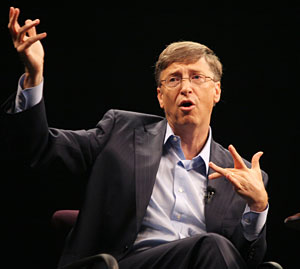
Ok, for starters, let me just say that I think this picture of Bill taken at the innovation summit is a little unfair, surely there must have been a better one. Be that as it may, it's obvious that I should have been the keynote at this summit! Why? Well, because these great minds have been saying just what I have all along:

Conducting business as usual, with finite energy resources and a growing population, means a lower standard of living, Sridhar warned. "We can't promise our children and grandchildren what all previous generations promised—that they can have a better future."


Taking an eco-responsible focus "is just good business... ...You can make more money because energy does cost money, and there's not a CEO in the world who doesn't understand that."


"Energy is becoming a defining issue of our time as we struggle with questions of how much we use and where we get it"

Yes, yes.

Kick and Bite

Have you heard about the paper from Xerox that erases itself in 16 hours? I don't know what to make of this stuff. I'm all for cutting down on the average 1,200 pieces of paper that the average employee uses each month, almost half of which is for daily use, but I don't know if this is the right technology to do it.

For starters, it will erase itself. That's bad - what if I want it for 17 hours? I have no control over it, and I think that's a big part of paper use right now - control to file, read, use however you want, then throw away.

Secondly, it's a technology. The paper itself probably goes bad after a while, stops working so to speak. So if you print off a 500 page report on this stuff and 10 of pages don't register any marks or (worse) erase themselves in a few minutes, what do you do? And I doubt the cost of this stuff is anywhere near paper.

I see this as a Kick and Bite product, one that is being introduced to keep a legacy process up and running. I'm not saying paper will fully go away, but I'm pretty sure that electronic paper will never make it.

Tuesday, November 28, 2006

Orca is a Whale

Orca is an online webtop system that can resemble any desktop that is out there -Vista, XP, Mac, etc. There is a free demo that you can try out (IE only) that is pretty exciting; although still a little clunky, you can see where this is going. Bye bye, desktop, it was nice to know yuh.

NATO - No Action, Talk Only

From the Blah, Blah, Blah department. A recent survey of 200 managers in the UK reported that about two-thirds thought that saving energy was important, but only 20 percent had performed an energy audit. Apparently 'awareness' is the problem:

Zoe McMahon of HP admitted that IT suppliers had to do more to raise customer awareness about the cost effectiveness of energy-efficient systems. "Having the [energy efficient] technology is one thing, but a lot of people don’t think it exists," she said. "There is a lot of education that needs to be done, particularly around the simple steps you can take like activating power management capabilities on PCs."

Okay, so our top IT professionals aren't aware of power management capabilities on PCs. Check, please!

For The Serious

We have the pedal powered laptop. Certainly when da Bomb hits this thing will be all the rage, until then, let's classify this as 'novelty'.

Monday, November 27, 2006

I Come to Bury This Computer, and to Praise It

Apparently the iameco company is now vending a variety of computers and peripherals that are completely biodegradable. I've covered the wooden computer before (in woody two shoes and redux), but it sounds like this thing is taking it to the next level. Can you literally throw this thing in the garden when you are done with it? Maybe, I can't tell from their info site.

Yet Another Diskless Workstation

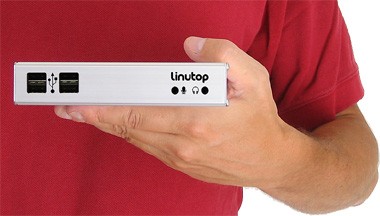
Linutop is a diskless workstation that seems pretty interesting and well suited to delivering web based applications in a corporate environment. I'm really interested to see how much it costs, it should be down in the $20-$50 dollar range if it has any hopes of being competitive.

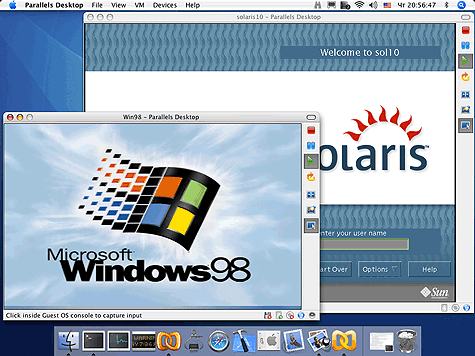
Get Virtualization Without Getting It

There are some good signs that server virtualization has gotten out of the early adopter phase and into the mainstream. Generally, this change happens when the exchange of pieces of papers with pictures of dead presidents on them can be increased or decreased. Yes! We are talking about money.

For starters, it looks like virtualization coupled with blade servers have the potential to reduce the complexity of your IT environment, potentially cutting the number of your servers in half. If you "get" this, you will be able to reduce your maintenence time and hardware costs.

Furthermore, PS&G is now offering rebates for every server that is converted to run in a virtual environment. The savings is substantial, up to
4 million dollars per customer. Again, if you "get" this, PSE&G is paying you to conserve energy, as virtualization runs more efficiently. People, this is free money - just make sure you apply before you start your virtualization project.

That's two ways to "get it"; here's another, more painful, way to "get" it. Apparently some outsourcers are saving a bundle of cash on virtualizing their servers, but still charging customer on a per server basis. Since it only takes 10 minutes to set up a virtual server as compared to 10 days for the typical "hard server", the margins on this are huge. Let's hope you are not "getting it" this way.

The biggest challenge will be to actually get your IT staff to "get" it, since you are basically going to reduce their hardware budget and (ultimately) staffing related to server mangement. They may feel that by "getting" it, their team will be "getting" it, and you will hear all sorts of mumbo-jumbo related to increased risk, sacrificing the existing level of service, etc. The key here is to have a green IT strategy where you focus on reducing your maintenance costs and put your IT people into more strategic endeavors such as solar, wind, etc. By doing this, they don't have to worry about "getting" it without "getting" it, and you can move forward by reducing costs. Get it?

Sunday, November 26, 2006

Suitable for Framing

Here's a few desktop wallpapers to get the point home. Kind of Gary Larsenesque but with an environmental bent.

Saturday, November 25, 2006

Ndiyo? Ndiyo!

Ndiyo is the Swahilil word for ''yes". It is also the name of a new ultra thin, ultra efficient computing system that is targeted towards developing countries. Similarly to the OLPC project, Ndiyo is using a thin client solution with Linux, Open Office, and Ubuntu.

It's a great idea, mainly because they are trying to address the biggest issue with getting computing going on a shoestring budget - skilled labor. Similiar to the Skolelinux project, the goal is to have a non-technical teacher get 20 workstations up and running in 40 minutes. Now, not to throw stones, but I challenge your IT department to do that. In addition, each Ndiyo terminal uses only 3 Watts, or about 5 if (gasp) you add in a mouse and keyboard. That's a little stark compared to a 400 Watt desktop with dual monitors.

As I've said before, the reluctance to introduce thin clients is not about saving money, it's about cutting maintenence budgets. The Ndiyo project comes very close to giving thin clients away, and IT still won't introduce them; they are terrified will be nothing to do when the desktops go away. How about using your new found free time to save the world?

Friday, November 24, 2006

D-Day for the UK

in just 36 days, businesses in the UK will need to be compliant with the WEEE directive. Basically that means producers of flat screens, printers and consumables will be legally responible for taking back their stuff and getting rid of it in an ecologically friendly manner. Too bad almost 40 percent of IT managers have never heard of WEEE.

Do you WEEE? Here's a
primer.

Thursday, November 23, 2006

Wintel is from Mars, OLPC is from Venus

The first OLPC's (I'll just turn that into a noun) have rolled off the assembly lines. From a green perspective, I'm excited about the project for a variety of reasons:

  • It breaks the Winintel buy/upgrade/throwaway cycle. Frankly, I don't know if the OLPC cycle will be much better, but I suspect it will be because it is designed with developing countries in mind, and developing countries are terrific at conserving resources. I'm not the only one.
  • There are a lot of them. This is exciting because it means there are a lot of parts available. As every SA knows, scavenging works best if all of your machines are the same.
  • It's right sized. I posted an article a while ago on using the 100 energy slaves we all have working for us on a daily basis. And, with the competition (the human brain) running at only 20 watts, these things have better be producing. In this regard, the OLPC laptops show great promise, as they only draw 2 to 3 watts. Basically, if they can do a tenth of what a human brain can do, they are a good bet. Compare this to a high end desktop running at 400 watts that has to do the work of 20 people.

With the Biggest R You Have Ever Seen

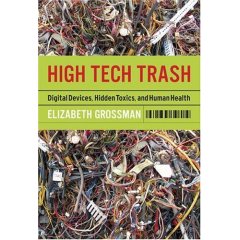
High Tech Trash by Elizabeth Grossman is the definitive work on eWaste, and this interview from Worldchanging sheds some interesting light on the subject. eWaste isn't the easiest waste stream in the world to recycle; Grossman reports it can take up to 15 minutes to dismantle a single piece of equipment. And even when you get the thing dismantled, the techniques for reclamation are crude. Grossman thinks, as I do, that electronic recycling starts with Reduce, with a big fat R:

You have to figure out how you’re going to make products that never mind are just easier to dismantle and recycle, but also have longer lives, both physically and in terms of the technology; and being able to upgrade them so you don’t have to buy a whole new case every time you need something. And you have to actually make sure that you’re using not brand new virgin materials every time.

Although the book had had some criticism for being too general, I think it provides a nice overview of the topic and is certainly the most comprehensive work to date.

Wednesday, November 22, 2006

Maybe. Sometime.

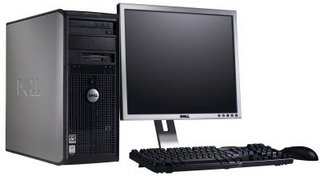
A big part of green computing is winning hearts and minds. Take that thing on the right, for example - see that? That's your new computer. That's because the desktop is going away. Maybe. Sometime. Many people have a hard time even thinking that thought.

Another issue is related to the sharing of computer resources. This is something that is really taking off, particularly in virtualization. The problem here that a lot of business models can't account for this. According to Richard Curran of Intel:

"Virtualisation raises questions of politics, such as who owns the servers, who pays for them and who manages them... "They have to start thinking of the data centre as a shared capability, a service, not a room housing 'my box'."

Truer words were never spoken; however, it seems like sharing is left to children. But it seems like the virtualization is really where the server room is headed. Maybe. Sometime.

Finally, we have the changing of the operating system from Microsoft to Linux. Some folks think it is inevitable. Some have already done it. And eventually everyone will do it. Maybe. Sometime.

Tuesday, November 21, 2006

The Electric Yardstick

By now, everyone knows that power costs are going to eat up one third of your IT budget in the next few years. Or maybe it's 40 percent of your budget. Fact is, no one really knows. But, as the saying goes, that's the problem with predicting the future; it hasn't happened yet.

But one thing you can be sure of is that vendors are going to duke it out as to who is the most energy efficient. Are Sun's Cool Threads really cool? Maybe not. How about Angstrom's Liqucool technology, which they claim will reduce energy use in the data center by 40 to 60 percent. One can even argue the whole debate is moot, because heating is good in cold climates anyways. Finally, HP and IBM are at it over their blade servers. Again.

Fact is, there is a simple litmus test for all of this - the first vendor to mention TCO loses. You know why? Because that means they are trying to bury their equipment's performance in the quagmire of IT, that discipline where 80 percent of initatives aren't even scoped out because 'IT is too complicated.' Bull. Plug a meter into it and give me the numbers.

What the High End is Doing

Supercomputers have been around since 1920, when IBM built custom tabulators for Columbia University. Nowadays they do just about everything from predicting weather to playing the stock market.

High-performance computing has (obviously) always been performance oriented. However, environmentalism is sneaking in here as well (some say the hippies are driving it), as supercomputing centers use vast amounts of energy. And, since peak performance is rarely attained, some of this energy consumption results in little or no performance gain. The problem is beginning to be studied; there is even a conference devoted expressly to this issue. There is also a site called Green 500 that ranks all of the supercomputers in the world by how ecofriendly they are. Like others, they are trying to determine the best way to do this, they have an RFC if you would like to contribute.

Sunday, November 19, 2006

What the Other Guy is Doing

Here's my second post in a continuing series of posts related to what the other guy is doing in green computing. I'm finding that there are so many stories on green computing recently that it's hard to even list them all. Here are some good ones:

IBM - they have announced their "Big Green" innovation plan with $100 million in funding. Also, the IBM blade servers are racking up efficiencies of up to 30 percent more than traditional servers.

Microsoft - Happen to be building aggressive, energy saving technology into Vista, primilarily by putting them to sleep after an hour. I don't see this as a big deal, SA's can do this now; in fact, one might see it as paternalistic. It will, however, save about 5 to 7 billion a year.

VMWare - is now offering businesses rebates between $750 and $1350 for every server that they unplug. Wow.

Final good news - Spending on green IT initiatives is up to 21 percent.

Friday, November 17, 2006

Your Majesty

It looks like Great Britian is taking the lead in legislating power consumption into action, particulatly with the climate change bill currently being proposed. This is hopeful, especially when a recent survey also reported than about 20 percent of IT dollars in selected European countries are going towards funding green IT initiatives.

It makes sense that England is doing this; energy is running about 7-7.1 (~14 cents) pence per kilowatt-hour there, and they don't have lot a lot of oil, or oil-related reserves to draw upon. Moreover, England has less and less influence to acquire them in the world market. I wouldn't be surprised if others countries follow suit quickly.

Tuesday, November 14, 2006

Fast and Furious Regulations

You don't often think of environmental regulations when it comes to purchasing electronic equipment. But they're coming, and they are coming fast. The WEEE directive is one of the big daddies that is getting the ball rolling. WEEE is mandated in Europe and must be compiled with by July 2007. The sad thing is that 25 percent of IT directors are unaware of WEEE, and 40 percent don't understand what it means. The short of it is that it means two things. One, you will need to deal with your IT waste or be fined for improper disposal. Two, there is more of this coming; WEEE is mandated in Europe, but other countries are rapidly creating their own 'WEEE-like' laws. England, for example, is ready to ban the incandescent light bulb. Use any of those?

Monday, November 13, 2006

Every Chip has Its Day


There has been quite a battle between the chip makers for some time now. It seems like each manufacturer is taking a different strategy when it comes to going green. What is interesting is that they are all going green, which is pretty exciting in itself. Here's a rundown:

VIA - The new guy on the block, seems to have a holistic marketing strategy. Their chips are low power, they offset the carson emissions on the chip, and now they are working in South Africa to bridge the digital divide. Definitely the crunchiest of the bunch, doing the most.

Intel - I don't know what is going on with these guys frankly. Definitely very much into the new multicore offerings that are rolling off the assembly line. These bode well for the future as the designers will have more silicon than they know what to do with, and the 5,000 core CPU is already within reach. In fact, Intel has already done the 80 core chip. But ultimately, Im not sure if this saves energy or puts all of your processing power in one place. They say it does.

AMD - probably the most recognized brand for energy efficient chips, definitely helped their their affiliation with Sun. Ironically, Sun is pushing their green campaign and AMD is mostly riding on their coattails, when in fact most of the energy savings of the Sun products comes from the AMD chips!

Saturday, November 11, 2006

Green Envy

Dan Briody is jealous of Dave Douglas, the VP of eco-responsiblity at Sun. Because it's such a cool job. And also the fact thats what Sun is pushing is so inevitably the future that he wants to be a part of it. Also add in Ed Cone, who also sees the massive benefits to the green revolution. Now if just the business owners could...

There Can Be Only Five

Computers, that is. In the entire world. At least, that's what Greg Matter from Sun thinks. And I don't think he too far wrong.

Here's a quote to flesh this out (from Greg):

I'm just saying that there will be, more or less, five hyperscale, pan-global broadband computing services giants. There will be lots of regional players, of course; mostly, they will exist to meet national needs. That is, the network computing services business will look a lot like the energy business: a half-dozen global giants, a few dozen national and/or regional concerns, followed by wildcatters and specialists.


I seriously agree with him. As I have said several times before, we only need one email provider in the world. Just one, that's it. Google is my choice. No more spam, no more huge bandwidth requirements. Just logon to Google and type.

Thursday, November 09, 2006

Back In My Day, I Waited at School, Both Ways

Nicholas Carr has a lovely article on something he calls Frugal Computing. First, I love the catchphrase - it's fresh and new, a little bit of a downer (who wants to be frugal), but I like it anyways. To quote from a quote, Carr mention that Gilder mentioned that;

George Gilder writes that "in every era, the winning companies are those that waste what is abundant – as signalled by precipitously declining prices – in order to save what is scarce." What is abundant today, he argues, is information technology - in particular, computing cycles, data storage, network bandwidth. Google, writes Gilder, operates a "massively parallel, prodigally wasteful petascale computer" in order to be "parsimonious with that most precious of resources, users' patience."


This really does cut to the issue, all this computer equipment is implemented to preserve user patience. The problem is that these days, no one really knows what patience is when it comes to computing. When I started using computers in grade school, I used to lug home these huge terminals, which you connected to the mainframe via a telephone line. I remember 300 baud where you could read the data off the screen as it was being typed. I distinctly remember 19,200 as well, because at that speed the whole screen would fill up with text almost immediately. And I thought, wow, this is great.

I also remember 25 Mhx processors, where doing anything even remotely interesting took several days to run. Where creating a zip file took 2 or 3 hours. You had to be careful because one mistake could be hours or days wasted.

As Carr notes, things have advanced so much that now things like processing power, hard drive space, and network capacity are 'free', and are treated as such. The problem is is that they are really not. It reminds me a lot of the meatpacking industry, where the steak is just served up on the plate. No one really cares how it is delievered, until, of course, you can't get steak.

Recognize This Guy?


Well, he's just your local friendly IT wizard. Or he could be the guy that fixes your machine. Or the guy that programs the accounting system. Or maybe he's the guy that manages your IT department.

He's your local witch doctor. Typically he does much more dancing than work. I'm not saying every department has a witch doctor (in fact, most don't), but it only takes a few to leave a big impression. Just look at that guy!

Monday, November 06, 2006

It's Almost a Crime

to be inefficent. At least, that's what the British government is saying by proposing to outlaw traditional light bulbs in three short years. Now, this is the start of something big for the electronics industry. I can see a not too distant future where governments start outlawing inefficient processors, inefficient laptops, monitors filled with lead, etc. More and more, my hope in government is restored!

Sunday, November 05, 2006

Proof Posiive

I enjoy tracking the progress towards the green IT goal. Every so often, I see a few things here and there where I think 'now there's a milestone'. A lot of times they are related to a huge company doing something that you have never heard of them doing before. Here are a few of those.

  • Home Depot, for example, is starting to sell solar panels to mainstream America.
  • Staples is now offering environmentally friendly paper. This is not too surprising, but that fact that the product is certified by the Forest Stewardship Council is, because they take into account certain non-business elements such as indigenous peoples' rights and community relations.
  • VIA's carbon free computing campaign is impressive.
  • Finally, Al Jazerra themselves have said that energy consumption will be one of the primary components in triggering ecosystem collapse. Now, that's a new angle!
  • Oh, and half of Europe lost power today. Not for the last time.

Friday, November 03, 2006

Because I'm Powerless

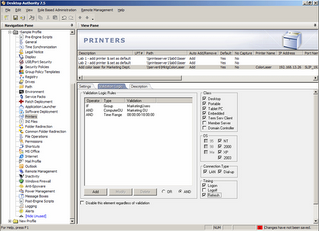
Green Business News often has stories related to green IT. They have a nice review on a product from ScriptLogic called Desktop Authority. DA does many things, but one of the things is power managment. And with 36 percent of all desktop being left on all night long, that's probably something that could save big bucks.

After seeing a lot of these types of products, I'm convinced that the decision to leave a computer on all night long is a primitive one. By that, I mean that I think people really do think about turning off their computer; in fact, I think most people think about doing it every single day. But the decision to not turn it off is primal, a classic short term gain over long term benefit trade off. And since it cost employees nothing to leave their machine on, all's it takes is just one more tiny thing to make the decision ("I might need it bright and early in the morning, fast!") Again, I think most people make this decision every day.

A lot of IT decisions really boil down to just two options - you can change people's behavior, or you can have a machine solve the problem. Often I have found that the slant is towards the machine.
If you feel you really need desktops (and there are many compelling arguments why you dont), it seems like you will need one of these software packages as well. The danger is that your employees may be less inclined to activitely contribute to your green efforts if they see the Technological Fix being applied, which will leave them powerless. And as we all know, something without power doesn't run very well.

Thursday, November 02, 2006

Regulated Back to the Stone Age

Leadership is something that is never in large supply. To be a leader, you have to see things that others don't see; so, almost by definition, there just aren't a lot of leaders around at any given moment.

That's too bad, because what we really need right now in IT is people who can take the green football and run with it. It's really getting down to the time where it's no more business as usual; things are changing, and if you don't change, well, someone else will make you change. And that someone else is going to be the government. In a report commissioned by the UK Government and headed by ex-Chief Economist of the World Bank Nicholas Stern, it was estimated that approximately 20 percent of all economic activity is going to vanish due to man made global warming. Politicans, for all the evil they might do, just aren't going to let that happen; they are going to prevent it by doing what they do best, which is regulate the tarnish out the industries that are causing the problem. And that industry, front and center, is IT.

WEEE and RoHS are just the beginning on this one. Politicans are going to look at numbers like these, where 30 percent of the UK power is going towards running ofice equipment and they are going to act, and not in a slow way. In like a punitive way, a way that lets them tax the tarnish out of business and lets the money flow into public coffers. And I promise you, they don't take prisoners, don't care if you go bankrupt or not.

Wednesday, November 01, 2006

The PC Board Treadmill

Sales of PC boards have dropped dramatically. This year there was only 8.8 percent growth, down from a historical average of 15 percent. Henry King, the analyst at Goldman Sachs, had this to say:

"While we maintain our positive view on Vista's impact on the PC upgrade cycle for the next three years, we believe Vista has shifted (fourth-quarter motherboard) seasonality to early 2007," King said.


Positive View, that the key phrase here. These new operating systems seem to get churned out just in time to save the associated hardware industry. But the question you have to ask yourself is - is this the right move for you?

Just in Time for Christmas

Walmart is going to start selling these notebooks, dubbed the "world's most efficient laptop", they clock in at just 12 watts. This wouldn't be be such a bad energy slave to have around, the specs are fine for most work and I bet the battery life is fantastic.

Monday, October 30, 2006

New Energy Star Requirements

The EPA has just upgraded the energy star requirements for PCs. It's the first upgrade since July of 2000 for the standard. The article I read made it seem like a joint announcement with Intel, who is clearly the worst offender when it comes to processor power usage. The spec is here, the list of qualified computers is here. Guess who makes most of the computer on the list? Our old friend Apple, who Greenpeace just bashed up a bit for being non-eco friendly. The irony abounds.

Plan of Attack

Lem Bingley has some words of wisdom concerning how go about getting your green purchasing plan going. For starters, don't let employees get stuck in the 'the problem is too big, we can't fix it' mentality. Every little bit helps. Lem also has these observations:

IT managers wanting to make a difference face two problems. Firstly, corporate bean counters won't wear purchases made on the basis of a fondness for hugging trees. This is why the WEEE directive is welcome, because it connects green issues to concrete cost factors. But the bigger problem is that environmental impacts are very hard to quantify.

The first I have covered repeatedly; profit and environmentalism have merged (See Yogurt Bombs.) The second is quantification of the benefits. Bingley makes a great analogy to cars by mentioning that the most enviromentally friendly car you can buy in America is the Jeep Wrangler because it is locally made and produced. Obviously the mantra Reduce, Reuse, Recycle applies here. You might want to read these tips on taking the lead on green IT as well.