Saturday, October 28, 2006

A Joke that has Come True

many years ago I had an NT 4 Adminstration Manual written by Mark Minasi. In one part, he was talking about how you will need to create swap files on your hard disk because you couldn't buy enough memory. He joked "Where are those 1 GB chips?"

Well, they are here. And the second joke is that in order to run Vista you will need two of them. Obviously the start of the next cycle where IT managers are persuaded to throw out every single machine the company owns to install the new operating system.

Sadly, there are a lot of middle managers in IT who love this stuff - crack open the pork barrel, lots more money coming in for hardware and software upgrades, and our staffs will be busy for the next year too. This really does nothing except further turn IT into a janitorial function; what they really should be doing is being the spearpoint for other technologies such as solar, wind, alternative energies, because they are the group that is most equipped to embark on these endeavors. Upgrading to Vista? The joke is almost certainly on you.

Friday, October 27, 2006

What the Other Guy is Doing

A recent survey I read on environmentalism suggested that one of the biggest factors in getting companies to switch to green technologies is whether or not their competitors have switched. This is a post to let you know what the other guy is doing.

In mobile phones Recellular is recycling 75,000 cell phones a week and making a pretty penny. Envirophone is doing similar work. Nokia is leading the charge to improve environmental awareness around phones and promote recycling.

On the big business side, Steve Forbes has now come out backing green business, citing the simple fact that when people start making more money, they are less likely to tolerate living in filth. He cites China and India as two booming markets. Wall Street is going green, using huge chillers to create ice at night and dump into the cooling systems by day. It's going to pay for itself to 2.5 years.

Sun was recognized as one of the best places for commuters. They are also investing heavily in Open Source and Grid Computing. Citrix has announced their dynamic desktop initiative, which is going to dramatically cut into the cost of upgrading to Vista, estimated to be between $3250 and $5000 per user. And Logicalis has cut the cost of their green training programs.

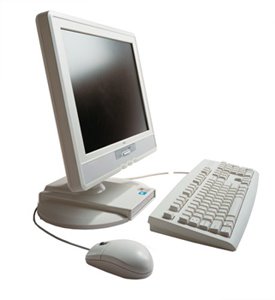
Rackspace is now offering carbon neutral web hosting, and IBM is tackling the power and cooling problem. Voltaire has come out with a softare product to dynamically manage grid computing environments, and the Penguin Approved logo has been rolled out in England to designate carbon neutral products. Finally, the picture above, Via and Everex have launched the most energy efficient notebook ever.

Where are you?

Thursday, October 26, 2006

The Sun Shines Black

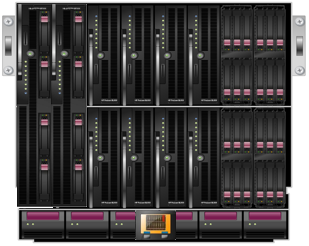
This is Jonathan's Schwartz posting on the Sun BlackBox. For those out of the know, the BlackBox is a portable data center, a shipping container packed with servers and associated gear. You can deploy it in weeks.

He makes some pretty good points, namely, what is your company going to do when you can't afford the power to run your machines?
It's already happening in England, where the rise in power costs will make the UK the most expensive place in Europe to run a data center.

If you havent staked out your power supply for the next 30 years, you are probably already in tepid water. It explains the mad scramble in the US Northwest to get the cheap hydro up there, and also explains why Google is
going solar in a big way. I would not be surprised if you see Microsoft or Google buying a utility or two in the next few years. That's when things will get really interesting; power computers, or lights for residential comsumers?

There is something about the BlackBox that is ominious. Essentially, what Sun is saying is that (gulp) you may need to move your computing power around physically in the next few years. This is such a new concept it boggles the mind. We alway assumed that we could just move our computing resources around virtually, and indeed we can, now. But when the network is down, say, one day a week, because there's no juice to run it, there is going to be disruption.

I'm telling you, Sun just blows me away with this stuff.

Energy Tools

Here's a quick and easy site to convert to your computer and monitor energy usage into CO2, cars, and acres of trees. Based on the documentation provided, I believe the calculations are fairly accurate.

Tuesday, October 24, 2006

Too Many Dirty Words

I constantly try and find 'ins' to get green computing into computing environments. As I've said before, one of the biggest problems is the convincing part of the equation, and I'm not convinced that calling 'green computing' 'green computing' helps. This is because the 'green' already has a lot of connotations, not all of them bonuses.

Take 'save the whales', for example. This is a terrible slogan on so many levels. First, it has the word 'save' in it. No one wants to save anything, because saving things is full of taking dangerous risks, being thrifty, or being brave, all of which just aren't available in any great quantity at a given moment. Second, it has the word 'whale' in it. Fact is, not a lot of people know about whales except that they are big, and I bet less than 1 percent of people have actually seen one. So, 'Save the Whales' comes down to doing something that you really don't want to do, to something that you really don't have any familiarity with, except you know that it's large.

But hope is not lost - we have folks like George Lakoff who have made a career out of reframing these slogans, and his article of Winning Words is well worth reading. George explains why phrases like 'Tax Relief' and 'Compassionate Conservatives' have solidifed their causes. This, followed up with the Reframing the Planet discussion, makes for some tasty reading. Here's a quote:

We need to constantly and consistently frame environmental protection as the path to prosperity -- and not in any abstract "quality of life" sense, but in real dollars-in-your-pocket terms. Environmental protection is the path to create clean power industries, hybrid car industries, green building industries. There is no future which is bright without being green. We must show our opponents to be what they are: job-killers, willing to mortgage both the future of the country and the health of the planet.


Now just rephrase this as:

We need to constantly and consistently frame green computing as the path to prosperity -- and not in any abstract "quality of life" sense, but in real dollars-in-your-pocket terms. Green computing is the path to clean technologies, industry breakthroughs, cost efficient buildings. There is no future for our company which is bright without being green. We must show our competitors to be what they are: job-killers, resource wasters. willing to mortgage both the future of the country and the health of the planet.

There's a lot more.

Sunday, October 22, 2006

Tiger Strides

is what is needed when it comes to adopting open source in the workplace. This fellow recommends switching out Powerpoint for Impress; however, the comments also have some great ideas. One is starting with firefox, that browser thing. Yes, yes, I know we have all used it for years now, but most people don't even know what it is. Or how about embracing a few open standards?

If you want tiger strides, you have to go where the tigers are, India. Kerala is a nation state there that has decided to forsake windows entirely. And that guy in the corner doesn't think its such a bad idea.

Friday, October 20, 2006

It's a Federal Matter Now

Now that we have an eWaste Working Group in congress to try and figure out what to do with the four million pounds of ewaste that are going into landfills each year. Better than a patchwork approach? Depends on how green you are - jumping through 50 (state) hoops is a lot harder than jumping one (federal) one. Kudos to Tom Joseph of Time Warner, mentioned in the article, for being the first IT manager I have even seen on record saying that he uses equipment until it burns up. You heard it hear first.

Word, Jerry

Lest we all forget, the environmental movement has merged with the money-making movement. This shortie from Jerry Bowles is summed up in the following quote:

Show me a good corporate environmental citizen and I’ll show you a company that is more concerned about cutting costs or saving money by eliminating waste from its processes than it is about melting Arctic ice floes. This is not a criticism. As a motivator of human behavior, short-term payback trumps long-range fear any day of the week. We all love our grandchildren, but what the heck.


Just brings the point back once again that what the hell is business doing out there? Most execs seem dedicated to do nothing more than analyze solutions that actually implement them. Even when the solutions will save them money. And if I use any more italics in this post I'll go nuts.

Thursday, October 19, 2006

Uhhh, Because We Can Department

Here's a novel idea, powering your computing cluster using vegetable oil. From the article it sound pretty impressive:

The cluster from the Maker Faire consisted of 31 PCs with a sum total processing power of 22.7 GHz and an average 733 MHz per node. Their peak power consumption on their vegetable-oil-powered generator was about 30A.


I'm not sure how scaleable this is, but if the nuclear winter comes, I'm sure this will be a whole lot more popular.

One More Use for Cardboard

is these stylish computer cases made out of this tried and true material. It's even customizable with one's initials or logo. No price given.

Wednesday, October 18, 2006

Saturday, October 14, 2006

5 Gigawatts!!!


It's the Internet Cloud, a formless mass out there that you rely upon more and more every day to do your work. Think Google - like, what would you
do without it? Of course you can't, but these massive 'applications' shall we call them are giving rise to a whole bunch of new rules about how things are going to look in the future.
There's so many good quotes in this one, but this is one of my favorites:

Google's success stems from more than foresight, ingenuity, and chutzpah. In every era, the winning companies are those that waste what is abundant – as signalled by precipitously declining prices – in order to save what is scarce. Google has been profligate with the surfeits of data storage and backbone bandwidth. Conversely, it has been parsimonious with that most precious of resources, users' patience.


So Google is wasting storage and bandwidth, so what? That's virtually the definition of every IT department out there. Here I think is the key though - they are wasting now to create the most efficient thing out there in the future. From a green perspective, that is a good thing, that's it. Imagine if every email account in the world was run by a single provider, that would be an incredible savings over the crazyiness of today, where people email videos back and forth to each other regularly.

There are a few other temporary problems, like the fact that this infrastructure consumes about 5 gigawatts of power per year, enough to power Las Vegas. But this is merely cost accounting, and it's really just a cost of doing business - when Microsoft started supporting 820 million email and messaging accounts, their power usage increased ten fold too.

But the final kicker is that there is no way to stop these players from finishing the game - it must happen, it is the most efficient way to deliver service. It is one might say a virtual monopoly. And contrary to what others might believe, we are all going to benefit from it.

Thursday, October 12, 2006

It's Via, By a Tree

Via seems to be really taking the lead in the processor market (green speaking) with their 'carbon free' processors. I blogged before that Via has paying for the carbon offsets of the chip if you bought a Via processor; now they are paying for the carbon offsets for the whole PC. Wowza. Intel? Who are they? Oh yeah, those guys that make the 145 Watt processors.

Music To My Ears

EnergyStar has posted a podcast series on the energy all of our gadgets use and what we can do help help reduce energy use. A few nice factiods here, one of which being that are 'gadget energy use' has jumped from 5 percent in 1980 to about 13 percent today. A nice listen.

Wednesday, October 11, 2006

All Right, Smart Guys

I worked at a public university, Rutgers, for six years. I had a great time there except there's one thing about educational bodies when it comes to computing; they have no money. This is a good/bad arrangement - good because it encourages you to spend one's resources very efficiently, bad because, well, there's just never enough resources.

The exciting thing about this though is that we have some great examples appearing in universities, who are really taking the leadership for the green computing movement. Here's a nice one on how a lot of universities are switching to Sun and open source because its cheaper. But the real laurels go to (who else?) Harvard who has just launched a green campus loan fund. The deal here is that Harvard will fund green initiatives, with the fundee paying thm back in dollars saved. It's a great idea, those Harvard guys. All right.

How Far the Mighty Have Fallen

From the bitter irony department... Apparently the United States is now being used as a dumping ground for thousands of toxic products that can't be sold in other places in the world to due environmental regulations. The article kicks off with a discussion of how plywood is being imported from China with formaldehyde in it. Ironically, the stuff is outlawed in China, but folks in LA are happy to build $75,000 dollar kitchens out of it. The article is short but our old friend the Treo 650 is mentioned (banned in Europe because of RoHS).

The other big shocker for me was the fact that the EPA has banned no chemical since going after asbestos 18 years ago - and failing.

Monday, October 09, 2006

Pretty Toys (With No Wires)

Thoreau was fascinated with technology, much like I and several billions other that are as well, though he realized that such excitement could be counterproductive. Witness a few quotes:

perhaps we are led oftener by the love of novelty, and a regard for the opinions of men, in procuring it, than by a true utility. (Walden, 21)

Our inventions are wont to be pretty toys, which distract our attention from serious things. They are but improved means to an unimproved end, an end which it was already but too easy to arrive at; as railroads lead to Boston or New York. We are in great haste to construct a magnetic telegraph from Maine to Texas; but Maine and Texas, it may be, have nothing important to communicate. (Walden, 52)


Looks like we moved on from there, as the plans for the worldwide WiFi network get going. There are several learned reports on the benefits of such a system, on this such as this one from Harvard), not free, and this one, yes free. Strangely, there is not a single doubt in my mind that it will be constructed, and yet like Thoreau I must ask - what will it be good for? And will it add more than never having been invented in the first place?

Since I just recently moved, I just had the chance to realize what it's like without communication. I have to say that this move was relatively easier than our last move six years ago. One of the big reasons for that is the cell phone - at that time, we only had one which left one vital party (either my wife or myself) out of the loop. With two cell phones, you always know what's going on, and you save a lot of wasted trips to the hardware store, the cardboard box store, etc.

The other events which happened is that we had no Internet when we got to our new place. This, in and of itself, is an absurdity only dictated by cable companies who feel they must shut off your service and then send someone to reconnect you. But I have to say that it was hard to not have the Internet (disclaimer: my wife thinks I'm addicted.) Here's a simple example - say you need to find the closest Home Depot to get something for the new house, what do you do? Look in up on Google Maps, of course. Except you don't have the Internet, and you don't have a phone book either, nor anyone you can easily ask. Suddenly, it seems like a real pain to find the Home Depot.

My minor disaster is not the only one - looks like installing web access in disaster areas is one of the best things you can spend your money on, unlike well, bingo and puppet shows. Sometimes we only realize the importance of something when it's gone.

Go Green, Young Man

Here's a guy who gets it, Craig Larsheid of the USPS. He's a guy that runs thousands of UNIX servers to handle mission critical applications. And he thinks about the environment every step of the way. Is he a treehugger?

He may be, he may be. But he also realizes it's the best way to do his job, particularly when other 'conventional' options are running out. Real estate, for example. As indicated in the post:

“We have finite real estate [to house servers] and a finite amount of cooling we can use,” Larscheid said. “So environmentally conscious [methods have] to be the way to go.”

Obviously this says it all, Craig doesn't feel too comfortable asking corporate to build another air conditioned building to house his servers. I wonder how many other IT managers are in the same boat? (hint: more and more.)

Good thing Craig isn't alone. Gartner has projected that up to 50 percent of the IT budget will be for electricity in the future, way up from the 10 percent it is right now (20 percent if you count the cooling). The result will be that the Age of Innocence enjoyed by IT from the mid-1990's onwards will vanish, and finally we will have some cost accounting for IT projects. The first step? Make your IT department responsible for their energy use.


Sunday, October 08, 2006

A Good Bet for a Big Battle

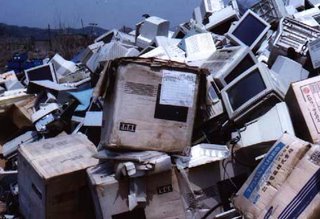
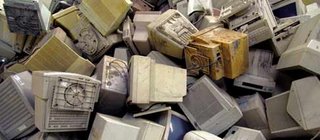
With a lot of issues, no one seems to care too much until they can actually measure some results that are just god-awful. For example, the fact that there are about 500 million computers in need of recycling in America doesn't really bother anyone too much, because they are all spread out. But if we had a big pile of them (maybe just 1 million) in one place, then that would be a big problem. Just look at my tire fire here and you will instantly see the similarity. We have million of tires in America too, but they aren't really a problem until you put a lot of them in one place and they catch fire.

For green computing, I'm betting that data centers will be the tire fires of the IT world. First of all, they are being constructed like mad, mostly in the Northwest where there is lots of cheap hydroelectric power (there are other good places too.). Now, with a data center, what you are doing in putting a lot of computers in one place, so of course your monthly utility bills are about the cost of putting a elephant in orbit around the moon, every month. Not only that, but these centers are ususally mission critical, meaning they have to be up all of the time.

The second big trend is that companies are consolidating their data center to save money, particularly money related to real estate. Look at HP's new worldwide iniative to consolidate 85 data centers around to world into six, saving about a billion per year. So now we have set the stage for crisis - lots of mission critical stuff in one place, all of which needs a lot of juice to keep it up and running 24/7. Add to that the fact that companies spent millions already consolidating their operations.

Now all we need is for someone to strike a match. How about the U.S. Government, who is not only drafting legislation to look at power consumption in data centers, but has also authorized the EPA to come up with a server efficiency standard. They are starting with servers now, but storage equipment won't be far behind.

All of this suggests to me that there could be some very rapid changes in data center design, server design and power usage. Woe be the IT manager trying to run P4 processors in downtown Manhattan on 10,000 servers, you might be in for quite a ride, particularly when you think that the really big players are scarfing up all the best sites (and energy) right now. And when the government tells you to shut down your mission critical data center because its not efficient enough, that could flatline your business.

No More Paper, Books, Dirty Looks

Envirowise has released a study claiming that the average office worker uses 50 sheets of paper a day. Furthermore, companies without printing policies continue to increase their paper usage by 20 percent a year. Compounding the problem is the fact that 80 percent of companies don't even know what they spend on paper every year!

However, the bright news is that companies with printing policies can reduce their usage to as low as 15 sheets per day; that's a 70 percent reduction. I have done several baseline studies on printing for firms, and generally you can't get below 3 cents a sheet for black and white printing. It can be much, much more than this, particularly if you own the equipment and have to pay for service. Color printing varies considerably but it is possible to get as low as 12-15 cents per sheet. Printing is similar to energy use is that it is generally considered to be 'free' for all intents and purposes, but an awareness campaign will go a long way towards conservation.

Wednesday, October 04, 2006

Let Me Ask you This


Sorry I was off for a few days, we moved to Boston. It was fine except that the truck broke down on the way; thank god for inflatable beds.

But let me ask you this - what's it going to take before IT departments start doing something about the energy they use? How about letting them know that on average about 10 percent of their company's energy budget is blown on powering computer equipment? And, oftentimes, it can be more like 20 to 30 percent after taking into account all the UPS, routers, switches, blah, blah blah. How about letting them know that this could go up to 50 percent in a few years. Here's some quick math for you - the average building uses maybe 8-9 kilowatts per square foot per year, so computer equipment might be 1 kilowatt on average, maybe 2. For a 100,000 square foot building, that's 100,000 kilowatts, about $10,000. That's average usage, not including data centers and server rooms. Let me ask you this - how would you deal if that number went to $50,000?

Friday, September 29, 2006

How To for How-To'ers

CRN has come out with a nice guide on how to build your own green PC. They start right at the processor, then go on to the power supply, motherboard, disk drives, monitor, and printer. They plug a few products along the way. It's a nice start up guide to get the handyman familiar with the task in front of them.

It's that Power Supply

Google is declaring war on the power supply. Power supplies are notorious for being watt suckers, with efficiencies of 20 percent on the low end. This has been discussed before, and there's even a group called 80plus that is dedicated to getting power supplies up to 80 percent efficiency. We will see how it works out.

Of course, one of the biggest power wasters is the conversion from AC to DC current, and vice versy. For example, incoming AC power is converted to DC by your uninterruptible power supply (UPS). Then it gets converted to AC going out of the UPS. Then it gets converted again by your computer's power supply to DC for the motherboard. A recent study suggested that you could save up to 20 percent if you run a DC-powered data center, skipping over the individual power supplies for the computers.

Power is one of those things that people think is just there, and it's cheap to boot. What will get companies to change their minds? Well, if it's not cost savings, it might be the government, who is starting to take a look at data centers and the power they use. It's all fun and games until the regulations get published.

Wednesday, September 27, 2006

Greenpeace - Nothing But a Gangsta

Aha, so now we see where Greenpeace was headed with their toxic scorecard. They have now come out with a mock Apple page on their website which encourages people to take up the fight against Apple, particularly their iPod. It's bad enough that they lied about their findings against Apple, that the original report was misleading and inaccurate. They have apologized for the initial report, by admitting the Apple MacBook Pro was RoHS compliant.

What a sad way to start off a morning; this is the most shameful eco campaign I have seen in a long while. I don't know how to respond to this campaign any better than this - employees of Greenpeace, you are bullies, and you are cowards. The half-truths on your webpage could apply, almost universally, to any vendor. I turn my back on you and your organization, you are nothing but a bunch of gangstas.

Tuesday, September 26, 2006

Solio, Solio, Let Down Your hair

Here's a fun little device that will recharge just about any gizmo that you have using the Power of the Sun. Solio is as clean as they come, their "Make a Difference" statement shows that they have planned out the full life cycle for the product, including offsetting your carbon emissions when you buy the product. I'm getting one.

All Cores Loaded

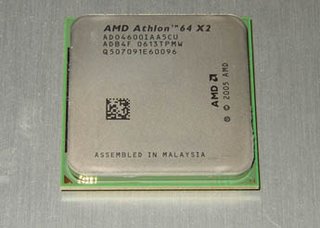
I love the byline here, "All Cores Loaded" - who even knows what that means. I tell you what it means, that AMD's X2-3800 series is blowing away the competition when it comes to power consumption. Coming in with a tiny 33 watts, this dual core chip got great reviews and is now fairly cheap, you can get it for just over $150 dollars. A little math here -saving 120 watts for a processor thats on 24x7 can save you $84 dollars a year at 8 cents per kilowatt.

Monday, September 25, 2006

Woes Me

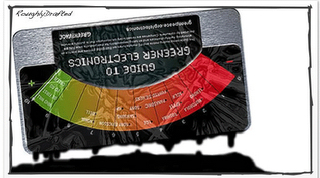
I actually thought that my writeup on Greenpeace's "Guide to Greener Electronics" was pretty good, but alas, too many other people said it much better than I. Here's Roughly Drafted's take on it:

Greenpeace activism is based upon the simplification of complex political issues into epic battles between good and evil. Rather than devoting a lot of resources into educating the public, Greenpeace, like most political activist groups, tries to create sensationalist drama to grab attention and put simplistic issues in the headlines.


Not only that but RD continues in another article to explain what I suspected, that Apple was being targeted as a 'do-badder'. There are pros and cons to Apple's behavior, some of which I have mentioned in posts such as (Cr)apple and (Cr)apple redux, but they are not all bad. My sense of this is that the green computing word is complicated - there's a lot of things companies can, should, and do. We need a way to iron these things out, a plan.

Sunday, September 24, 2006

Starting the Bus

Implementing changes in IT is not always so easy. The changes usually affect pretty much everyone at the company, there's a lot of levels of sign off for projects, and employees are generally terrified of any new configurations. Here are some guidelines for getting your green computing moving:

  • Separate your maintenance, tactical, and strategic IT spending. This is a simple thing that most companies do not do. Dividing these pots of cash will set the stage for ramping up a green computing program that concentrates on efficiency without sacrificing long term objectives. Baseline each of the three as they currently exist in your organization.
  • Announce some green computing goals and objectives with timelines well into the future. It is natural for people to have anxiety about imminent change, but changes well into the future aren't as bothersome. Set some goals with some numbers you intend to hit - many Asian companies are trying to squeeze out up to 80 or 90 percent of existing budgets!
  • Educate employees about the benefits of green practices. Prepare some internal materials on your intended program, with some facts and figures employees can understand. For example, £75 of energy saved is the equivalent to a tonne of carbon being kept out of the atmosphere. The goal of this phase is to create a mindset that individual behavior has a collective outcome.
  • Reduce your maintenance budgets. According to CIO Asia, most companies spend about 76 percent of their IT budgets on maintenance. You can get this down to 50 to 60 percent in a well managed organization.
  • Measure results, adjust, and repeat.
You should be able to get the first cycle of a such program through in 6 months to a year.

Saturday, September 23, 2006

The Devil's Work

Heretofore refered to as the Devil's work, at least when it came to power consumption, blade servers are getting a green face lift recently. Specifically, HP has come out with some new integration technologies on their blades servers that reduce TCO. Some of these technologies include more energy efficient disks, better management tools, and improved cooling flowthrough. Worth a look, I'm not sure it can compete with full blown virtualization though.

Greenpeace Is At It Again

More analysis from Greenpace with their new toxicology report rating a few of most popular laptops. I was going to wax poetic on this, but someone else already did, a fellow by the name of Keith in the comments here. I have to post it in its entirety, it's too perfect:

It's really surprising and disappointing to see TH swallow the GP press kit without questioning or critical analysis. I have come to expect more from TH.

I read through Greenpeace's new "chemicals in computers" report. The title, and the headers on their press release, do not reflect at all the actual findings. Read it closer, please --the findings actually make the laptop manufacturers look pretty good, especially when you consider that the laptops in question were purchased months before compliance with the European Union's(EU) RoHS Directive was required (these were, after all, purchased in EU member states) and may have been the last of their kind (pre-RoHS) in stock...

No cadmium, mercury or hexavalent chrome found in any of the laptops.

Lead was only found in the HP model (Pavilion dv4357EA), and that in relatively low concentrations in solder (surprise, surprise).

No HBCD or PBB identified in any of the samples.

No PBDEs were found in the Dell and Sony models, while Apple (which Greenpeace has savaged in the press) and Acer had only trace (basically negligible and certainly under the levels allowed by EU law) levels of PBDEs.

No TBBPA (a chemical not banned by the RoHS Directive) was found in the Sony model, and only traces found in the others.

The amount of PVC (also not banned by the RoHS Directive, or by national laws) was also very low: only a single wire in the Acer and Apple (both slammed in the "Greener Electronics" report), and two wires in the HP model.

TH calls this "ripe with toxins"????

GP played up in the press release the few chemicals of concern they actually found, and tried to make much of finding bromine compounds, even though they could not prove most of it resulted from brominated fire retardants (TH leaves the opposite impression in this article). GP fretted that if these units are incinerated, the bromine compounds can become a toxic hazard. But is this worry truly significant? How often are end-of-life (EOL) electronics actually incinerated in the developing countries Greenpeace says it is worried about? Not often at all in Latin America and the Caribbean, I can tell you (as someone who has written alot about waste management in LAC nations).

I suppose it's good that GP tried to get at least *some* concrete test data instead of relying solely on published corporate claims, but this was not the way to do it. But please, in testing and statistical terms, five units bought in 2 countries proves little.

Why, given the funds they command, the number of office they have worldwide, and their expressions of concern about *global* hazardous material management, did they not test more units from more countries, including some non-EU (preferably some from developing nation markets such as Mexico and Brazil)?

If they don't want to spend the money or are not up to the job, why not team up with consumer testing groups with proven track records such as Consumers Union US (publisher of Consumer Reports)? Surely CU would do a better job of testing & reporting than GP has done so far.

The lack of transprency in their selection criteria for these test is just like the lack of transparency in why they picked which manufacturers and which critera they covered in the "Greener Electronics" report. Why these 5 firms, and these 5 models, instead of all 14 firms & types of electronics targeted in the "Greener Electronics" scorecard? Why pick the UK and Denmark to buy the units? Picked at random? Based on market share/size? Something else? Why only laptops, and not other electronics (no, they didn't test game consoles)? They don't say, leaving them open to questions about their motives in what they pick to test.

I guess it's good that they carried through their prior threat to downgrade anyone (in this case HP) they decide is not living up to their public claims on chemicals. But why then, did they not upgrade Acer and Apple for being better on this than expected in these tests? Haven't they said that they want to encourage positive corporate behavior?

GP needs to clean up its act. If they continue in this manner they may score media points in the early going, but will lose ground if the electronics industry ever mounts a well, conceived, well-documented, assertive counter-campaign.

Well, if you care to hear more musings (rantings?) about this, check my own blog.


And just for that, I'm linking him, both here and on my link list.

It's Always Better With Two

This article has a unique perspective on computer use in the office; for users that need a laptop, buy them two computers! Get a laptop for on the road use, and a desktop for working at the office. The really odd thing to me is that the company proposing this, Green Machine Shop, actually makes pretty green computers. Here's a quote:

"Notebooks are great for people who need mobile computing, but too many people use them all the time, even when sitting at their desks. The higher heat shortens the lifetime of electronics and battery," said Thomas Schramm, president of GreenMachineShop.com, of Ann Arbor, Mich. "The higher noise level and the unergonomic setup can reduce productivity and cause health issues. Using a desktop computer whenever possible and a laptop only when necessary is the best solution."

Ok, the electronics and battery life are shortened. Maybe, but most companies will get rid of these machines anyways on a two to four year cycle. Plus, since about 80 percent of the energy for any computer goes into its manufacture, I am having a hard time justifying two computers to save a little battery life. Maybe as a part of a comprehensive program... maybe. Unfortunately, this seems like a misguided attempt to sell more desktop computers.

What this really highlights is the fact that choosing the green alternative is complicated. I have been thinking for months now that we need a spreadsheet or some tools to help us make these decisions. I have to get on that.

Wednesday, September 20, 2006

Lenovo a Go-Go

Lenovo, that computer manufacturer that you have barely heard of but manufactures millions of systems per year, just had 42 of their products certified by ePEAT. These includes some of their ThinkPads, their ThinkCentre desktops, and several monitors. Many of these products received the silver rating.

For those not in the know, ePEAT is an EPA approved standard for rating computer equipment based on their environmental attributes. It was developed over three years with participation from stakeholders in both the public and private sectors. This is in stark contrast to the hypey, self created Greenpeace scorecard that gave Lenovo one of the worst rankings. Way to go, Lenovo.

Look Ma, No Moving Parts

The new TDK hard drive replacements are constructed of flash memory and are completely solid state technology. The one shown at right is 32 GB. These things are going to revolutionize the industry for a few reasons. First, they will be really fast, maybe 1000 times faster than hard drive access. Second, with no moving parts, they should last darn near forever, and that's as green as the motherboard it's printed on. No word on the cost of these puppies yet.

Monday, September 18, 2006

Bandwagon

A few days ago I mentioned the VIA chip which is not only low power but also offsets the carbon emissions of the chip over its lifetime. Recently it seems a whole bunch of vendors have come out with statements on what they are doing; ECS, for example, a big player in motherboards and laptops, announced a green computing campaign, mostly geared towards supply chain management. Sun of course continues to crank out the leadership for the field and just passed Dell to become the third largest suppliers of servers in the world (although Dell has its own green program as well). Finally, Accell just announced a whole raft of new cables that are RoHS compliant and environmentally friendly.


So, the band is playing. However, some of these campaigns are blowing only a few notes, mainly the committment to start doing something. I think we are rapidly moving off the dime here though; through a series of oneupmanship these policies will get more and more refined to take into account more green computing principles. Seems the bar right now is set at taking into account carbon emissions as well.

Get your Schmuck Here

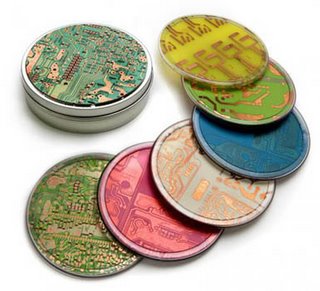
Motherboard Gifts offers a variety of items that are manufactured out of recycled motherboard components. They have been in business for over 15 years, and I think they are the only outfit doing this type of thing. Lots of back to school items.

Sunday, September 17, 2006

Goofy Mashups sell Virtualization

Or so it seems. IBM has been touting their virtualization programs by showcasing it with items such as Red Bull Racing and the US Open. This is either genius or just plain goofy. Look a this picture on the right, does that really make any sense? A race car to sell environmental products? Or does it mean that the motherboard is fast, just like the car? I bet the guy is forcing a straight face.


Be that as it may, I am very excited about IBM's PowerExecutive software, which monitors and diagnoses virtual servers in real time. They make reference to monitoring the 'virtual climate' and responding to it, much like a weather report. Now, that I like!

Friday, September 15, 2006

Lead, the Insufferable Bore

There's so many chemicals in modern day electronics that its hard to keep up with them, let alone pronounce them. We've got lead and mercury, or course, but also such items as brominated flame retardants (BFRs), Tetrabromobisphenol (TBBPA), and Polybrominated Diphenylethers (PBDEs). Not only that but we have CD and EMR too.

A lot of these new compounds are exactly that, new. Many were created in the last 50 years and I daresay, generate an ardent desire in the community to rid ourselves of these ghastly compounds. I'm not saying these items are not damaging, but I do wonder how these items get labelled as damned in the first place.

Which brings me around to lead, the insufferable bore of the environmental world. I don't think that there is a single compound that has been studied more than lead for its environmental impact. It helped kill the roman empire. It is regulated in buildings for paint. There are comprehensive programs developed to regulate it. And it's still around, particularly in computing equipment. Like the compound itself, lead seems to melt and slip into every crack of the economy where it's not regulated. We take it out of paints but it is still in monitors. We take it out of plumbing solder but it's still used to create motherboards (and some people think it's not a bad idea). The fact is that lead is the poster child for how society deals with toxic chemicals - we regulate them for specific instances, where they get replaced with other compounds, then they just pop up elsewhere in unregulated industries. Lead is boring because it sets the standard for dealing with any environmental chemical, just regulate where necessary and mop up the other messes as they come.

What we need, and what I think is coming, is a more comprehensive view about the chemicals that we are using; having your company complete a baseline study of the environmental impact of your computing equipment and linking it back to your suppliers and vendors is a big start. Because the way to solve these problems is through partnerships with your fellow companies, not through regulation. Otherwise, like lead, we will end up with a series of tactical solutions which ultimately won't address the problem. And that's a bore.


Thursday, September 14, 2006

The Black Gold Rush

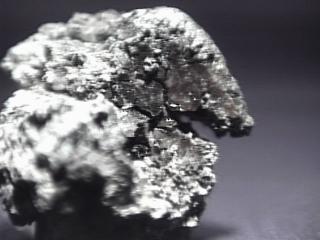
Columbite-tantalite — coltan for short — is a dull metallic ore. When refined, coltan becomes metallic tantalum, a heat-resistant powder that can hold a high electrical charge. These properties make it a vital element in creating capacitors, the electronic elements that control current flow inside miniature circuit boards. Virtually every cell phone and computer in existence uses tantalum in its production.

Tantalum itself is not particularly toxic, although it is a heavy metal. The greater problem is that its relative scarcity has led to staggering prices (up to $400 a kilogram in 2000) which has prompted a massive mineral rush in areas such as the Congo. Unfortunately, it has been used to fund the bloody civil war there. In fact, probably most of the coltan in the Congo is used to fund war; in 1997, the pre-war days, the Congo only produced 2.5 tons of coltan, but in 1999, they produced 70 tons. Since usually there isn't a lot of new enterprise in war-torn counties, it seems plausible that a lot of these exports were going to fuel militias.

What does it mean. Well, one thing is means is that is there is a mineral rush going on, and generally mineral rushes, such as the California Gold Rush, destroy the environment. We can also add prostitution, price gouging, and slave and child labor into the mix as well. Finally, most of the native bushmeat is slaughtered for food for the miners, including
elephants, gorillas, chimpanzees, buffaloes and antelopes. It's really not a nice process.

I often find it hard to find stories on the social responsibility aspects of green computing; other items, such as power consumption, are much more plentiful. But coltan is an example of such, as the demand for the mineral is directly linked to the explosion in computing devices. Since it is impossible to tell if particular manufacturers are receiving their tantalum from the Congo, I think the best use of this information for CIO's is to put another tally mark in the box marked 'Reduce'.

Mano a Mano ala Chips

Lots of exciting stuff happening with chips these days, with regards to green computing. Let's start out with the new chip from Via, which cranks out 1.8Ghz at 20 watts. That's roughly the energy used by the human brain, and at 1.8Ghz that's enough to make we worried that maybe I will be replaced by a computer some day. I'm running for my computer-bashing club right now, that'll fix 'em.

This new chip is great on power, but not only that, the company that makes it will pay to offset the carbon emissions by funding energy conservation, reforestation, and alternative energy projects. Wow. That's what we are talking about. Now we just have to see if it catches on and others follow suit.

The definitive guide for chip comparisons based on performance per watt seems to be LostCircuits. Pretty comprehensive, including reviews, benchmarking, and a great many other things such as 'memory subsystems' and 'access latencies'. Ummm, tasty.

Finally, there is a lot of excitement around designing the chips of the future, particularly in regard to energy use. It turns out the most energy-intensive operation at the chip level is to destroy a bit in memory. So, if we minimize these operations, we can get chips that are vastly more efficient than the ones currently in production. The idea is called reversible computing, and there is a group at the University of Florida who are conducting research on designing these chips of the future. Look at the graphs to see where we are headed - all of Google's servers on a mobile phone!

Tuesday, September 12, 2006

It's a RoHS Sandwich, Take a Bite?

About RoHS periodally publishes a list of products throughout the world that have turned RoHS compliant. Pictured at right, a sandwich maker. Who is going to take a bite?

Well, some folks think RoHS is pretty unappetizing. It's not just because they are ill prepared for it, even though they had years to get ready. But, according to the article, about 83 percent of companies who responded to the survey are not RoHS ready. The reason for this, of course, is tactical thinking. Most companies think RoHS, and regs of its ilk, are nuisances that can be sub, or a, verted. So we have this kind of clowning, where loopholes are already being found in the RoHS legistlation. Oh, those clever lawyers.

What they really should be doing is getting ready for the bloodbath, as firm after firm gets hammered under RoHS. Here's a partial list of the casualities. At least, we could let the business case prevail for people to take action. What kind of sandwich is RoHS? It's what you make it.

Sunday, September 10, 2006

Let's Go to the Movies...

because that is what seems to be the new trend in buying monitors for business and pleasure. It used to be, oh, way, way, back, maybe even ten years ago, that a 15 inch was okey-dokey for the typical computer user. Then the 17 inch monitors came, then the 21's. I lost track after that because I stopped at 17.

Turns out that maybe I should have kept following the trend, as studies prove that more screen space turns into more productivity. Slate is calling it the true desktop environment, because it really looks like a desk now, you will have piles of virtual documents all over the place. Wow, just like real life. Day traders have done this for years, have 6-8 monitors all with something different running on them.

I haven't tried this yet, but I am going to because i have heard from co-workers it really does make a difference. I hope this just isn't more non-discretionary spending thrown at users in high hopes that their productivity numbers will increase. The greenie in me says that this is a fine line between getting yet another thing to throw out in a few years, and and having some measurable gains in efficiency.

Friday, September 08, 2006

One Potato, Two Potato

James Murray has a piece here on whether IT can lead the green revolution. Picking up from my last post, I wonder where we, as a people, are going with this. Here's a quote:

If increased use of aircraft and cars has accelerated climate change, then new communication technologies and tools can reduce the need to travel without causing irredeemable damage to modern business.
On the face of it, this is a strong argument; carting ourselves around is more pricey than sending ourselves around, and it's probably true. However, given the fact that computers are more wasteful than cars to produce, I'd like to see the full cost benefit here; there's a good chance that it's not such a great deal after the communications devices end up in the landfill.

I'm no Luddite, but I have no problem with inflicting 'irredeemable damage to modern business'. I have no problem dropping the Pringles and the GoGurt from our society, the perfectly made, heavily marketed stuff that we have come to identify as progress. The fact is that if Pringles went away tomorrow no one would care. And here's the important point - it is going to happen. It's going to have to, because these things take so much energy for so little benefit that some day they are just going to vanish. And they are going to vanish because they are unnecessary.

I think the same thing is happening in computing right now, the things that are pointless are disappearing. The massive overbuying of equipment, the million dollar software projects that don't work, the bloated support staffs, all of these things are doing a Houdini. CIO's have stopped eating the Pringles. Murray touches on the fact reducing IT costs is could be the first step into seguing into other fields such as solar, and I agree that this is both probable and promising. Let's see if it works out.

Wednesday, September 06, 2006

100 Watts for us, 11,000 Watts for US

An earlier post turned me on to the fact that a human being uses about 100 watts in our daily activities. That seems like a pretty good deal to me, we can do all sorts of things for only 100 watts -run jump, hide, think, etc. But it turns out that as an American we use about 11,000 watts. Now when I think about that, I say to myself, ""Myself, that's a real ton of energy". Especialy if you listen to Bob Black, who thinks that 90 percent of all work is just combatting the work of others with nothing really productive being accomplished. So if we are blowing 11,000 watts on doing things which are only 10 productive, Houston, we have a problem.

Which brings me around to our 100 energy slaves that we have cranking away for us. Here's some of them pictured above and critiqued in this article by Elizabeth Grossman. The bodies of the fallen, used up in our day to day duties. Did they make the world a better place? Apparently not so much as one would think, which, after taking into account all the resources to build these things, the new gain in efficiency turn out to be damn near nothing. I love computing, but what's the point? Show me some numbers to make me a believer.

Monday, September 04, 2006

Pringles and Pharaohs

When I did my grad school work, one of the topics I was interested in was urban transportaion, particularly subway systems. The first thing I found out is that almost none of them made any money! Even huge systems like New York, Moscow, Boston, always ended up in the red. I couldn't believe it - the same is true incidentally for essentially all types of mass transit, none of them turn a buck.

Except for two systems. One is in Toyko, the other is Cairo, Eqypt. Cairo makes money because the officials who invested in the system were businessmen. They couldn't afford to drop billions of dollars in public money and have the system be a failure; they made it cheap to ride, and brutally eliminated all above ground competition - cut bus routes, restricted taxi zones, etc. so people were forced to take the subway. And it worked; as the only subway in Africa, it is a smashing success.

In such cases, necessity is the mother of invention. It's beautiful when it works. Compare that to some of the things pouring out of America, like Pringles and GoGurt, where invention seems to be the mother of necessity. And for green computing? Forget it. You won't find a lot of answers in America. We're too rich, too full of Pringles and GoGurt to care a lot. We've got some good players, yes, but look abroad for bleeding edge innovation. Because they need to be.

Which brings me to my article today, from CIO Asia which seriously looks at how much money they could be saving in IT operations. These are the conferences where you will see numbers like 80, 90 percent IT cost savings thrown around like teenyboppers in a mosh pit. They are serious.

Sunday, September 03, 2006

Sun Gives Away Hardware, Appistry

This article shows just how crazy the server business is going to get in the next few months, years. Of particular interest is that Sun is now giving away hardware, and relying on maintenence contracts to make some bucks. Also, enter a new player on the scene - Appistry, a company that provides the grid to run large scale application on. What's the big deal? Well:

But the greatest value of Appistry's approach to virtualization may come in the way it affects the work habits of users. Bioinformatics researchers at one pharmaceutical company were used to running an algorithm that took six hours to run on one processor, making it essentially a batch process. While the job was running the researcher could do little more than wait. Applied to an application fabric of 150 processors, that batch process now runs in 144 seconds, making it effectively interactive and changing completely the way the company uses its manpower and does research. THAT's innovation.

Indeed, wow. More on this to come.

Saturday, September 02, 2006

Is Utility Computing the Best Green Alternative?

Utility Computing has been with us for a while, in fact since 1961. The idea is to sell 'cycles as a service'; just strap a meter onto a server and then the user pays for whatever computer time they use. It is much like any other utility such as gas, electric, cable, etc.

But is it green? Certainly Sun thinks so. Cassatt, a leading provider of management software for these types of installations, seems to head in this direction. Here are some bullets from their brochure:

  • On average, 90% of IT resources in major data centers sit idle, which translates into millions of dollars in unused assets.
  • Data center space and power requirements are running at maximum capacity or pushing
  • beyond because so much hardware is needed to maintain required service levels.
  • As much as 90% of IT budgets are spent on “keeping the lights on,” leaving very little money for implementing new ideas that could help with competitive differentiation.
  • IT organizations are constantly playing catch-up with the ever-increasing demand for
  • improved service levels from their business applications.
  • Even with the dramatic capital expenditure savings realized by low-cost hardware, and
  • moving from RISC/SMP to small commodity servers, IT organizations are not able to make substantial cost reductions.
  • Capital savings are completely off set by increases in operational costs.
Not much to argue with here, although I would go with 80% of hardware being wasted, and 80% of the typical IT budget being used to 'keep the lights on'. Utility computing is clearly a efficiency driven technology which will definitely translate into a better environment and maybe some social responsibiliy as well. Could be a big part of the puzzle.

Friday, September 01, 2006

Outfox the Fax

Here's a bullet item to put on your CIO list of things to do - optimize your fax machines. Faxing has become such a novelty item, akin to using candles. Yeah, I have a few around, and when the lights go out I use them and feel like I'm camping in my own house. It's fun for a while, my son loves it.

However, as a business process I seriously wonder where the fax machine sits. Probably 80 to 90 percent of the faxes I send are orignially electronic documents, so I have to print them out to send them. And since the quality of the incoming faxes are never too good, it always seems this is for some kind of temporary communication transfer. There are a few cases where the fax is still valuable e.g record retention, warehousing, etc., and generally these are cases where the receiving party is just going to print the document out anyway.

Virtual faxing would eliminate a lot of this rather outdated method of communication. There are plenty of companies out there that do this such as GreenFax who charge a nominal fee to send and receive. In additon, there a lot are software packages as well that you can install in house and have your users fax away as the click of a mouse. And, for the technically savvy, you can get rid of the POTS phone lines as well and switch over to Fax over IP. The only thing left to do is find how much much money, trees, and heartache you will save - it's a win, win, win.

Four Reads

I have had these four links forever in my bookmark folder and have never had a chance to get them out into the wild. Except for Ecomodo, which often has a perky story on some aspect of green computing, they are all summaries of the green computing movement. Lean, Green Machines is full of facts and figures and makes a good case as to why we need to move forward. Green computers, part five, follows up with a panoply of links to the well established players, and the rise of bright green computers caps it off. Read these three and you will have the gist of the argument.