Thursday, February 01, 2007

Look Ma, No Lithium

From the what-else-is-new department; apparently we won't have enough lithium to power all the world's vehicles either (900 million), using those cool battery powered cars that are up and coming. And with most of lithium supply in Chile, Argentina, and Bolivia, there will be some interesting geopolitical dynamics around resources in the coming years.

No Copper. No Tin. Those stinky landfills are looking more and more attractive for mining.

The White Waste Stream

Chris Jordan has some neat artwork that captures the amount of resources we use every day. Shown here is 30,000 reams of office paper, the amount used in America every five minutes.

Dress it up a little and hang one by every printer in your office with an appropriate slogan. People will think twice before printing.

Wednesday, January 31, 2007

EnergyStar Advancing on all Fronts

The EPA is doing a bang up job on the new EnergyStar standard which will include servers as well. A lot of added gains in efficiency need to be attacked at the design and material levels, and IBM and Intel are doing just that with new materials like high-k; sounds like a breakfast cereal. EnergyStar is supporting that work but is also addressing the macro level such as the fact that half to two thirds of your servers' costs are hidden away in power and cooling.

Unbelievably, only half of the juice ever even makes it to the CPU! It's a one to one relationship - one kilowatt for the server, one kilowatt to cool it. Per kilowatt, that translates into $12,000 minimum for upstream hardware and another $3500 for site costs. It's hard to win the battle when you don't know the casualties count, but EnergyStar is definitely helping out with that.

Vista Will Eliminate Your Vistas

Generally I'm not one for posting the same story twice in a row but the environmental damage from Vista is all over the press. The sound bites are telling - GBN called the resulting environmental damage "massive", BAN claimed it was a "digital dump" perpetuating the "digital divide", the UK Green Party mentioned that "Future archaeologists will be able to identify a 'Vista Upgrade Layer' when they go through our landfill sites." Harsh light.

Microsoft has already shored up a defense against the environmental claims which is telling in and of itself. They told letsrecycle last night that "nearly all PCs on the market will support Vista". Is this legerdemain? Are they referring to existing PCs, or new PCs you can buy right now? If the latter, it's probably true, but if the former, then it is almost certainly inaccurate. For example, one study found that half of the existing PC base couldn't run Vista. They have also responded to the Green Party, claiming that they are "doing their best to improve their environmental standing." Ok, but Computer Aid thinks 10 million PCs will be scrapped as a direct result of Vista. And while I did see plenty of references to Reuse and Recycle, the biggest R - Reduce - was completely absent from the article.

The first big company to announce full conversion to Vista will get hammered in the press for being unfriendly to the environment, and the press will be right. From the green perspective, Vista is poison. Touch with care.


Tuesday, January 30, 2007

Solitaire Never Looked So Good

Vista has come out amid much fanfare after a five year, 10 billion dollar investment. Microsoft is pulling out all the stops to sell this thing, including suggesting that the patriotic thing to do is to buy a copy of Vista. Flag waving? I'm staring into my coffee.

The waste that Vista will generate has gotten a surprising amount of coverage. The main concern is the hardware requirements, which generally exclude older machines, not purchased in the last two years. The Green Party is running an anti-Vista campaign on these grounds, based on the fact that millions of perfectly good computers will be scrapped to run Vista.

Some are more concerned than others -
Peter Lewis wrote up a review of the new product. The review is funny - I don't know if he's being supportive or droll. Take quotes like this:
"[Vista has] some significant headaches but no deal breakers. One big hurdle is that you'll need serious hardware to take advantage of the best features. Only the most expensive versions of Vista - Home Premium and Ultimate - offer the new "breakthrough Vista experience" Microsoft is touting, including the glassy Aero interface and fancier graphics. Older PCs lack the horsepower to run it. If you haven't bought a new PC in the past year or so, you'll probably have to grab your wallet and a screwdriver to upgrade your hardware. That's not including the hundreds of bucks you'll spend for new Vista-enabled versions of your favorite applications."

So buying a new computer to run Vista isn't a deal breaker. And I need a screwdriver. Good to know, good to know. I'll just grab my wallet.

Clearly Microsoft is on the ropes here, with more and more folks suggesting that this will be the final push away from Windows into Linux. And with Dell now offering Vista-free computers, they are losing hardware support. Maybe the best market for this thing is the 13 percent on Americans who have never heard of global warming.


The LifeDrive Murder Mystery

The LifeDrive from Palm has been discontinued in Europe, killed off by RoHS. Actually, it was killed off over a year ago. What happened? It was such a promising product, and so young. Let's look at the progression of events in the LifeDrive's life:

  • Spring, 2005 - LifeDrive debut, selling for $500.
  • January, 2006 - Price cut, dropped to $450.
  • March, 2006 - Another price cut, dropped to $400.
  • July 1, 2006 - LifeDrive pulled from Europe due to RoHS, not widely announced.
  • July 10, 2006 - Rumors circulate that the LifeDrive is going out of production, only a little after a year in production. Palm denies it.
  • January 29, 2007 - LifeDrive labelled 'End of Life' at Palm's store.

A little suspicious if you ask me. Three price cuts, then pulled from Europe, but still widely available in the US. With the hush-hush, doesn't it look like Palm is dumping these things on US soil to extend the product cycle a little bit? Because they didn't do their homework on RoHS. Now they probably figure that it would hurt their image to keep it out there. What did Palm know, and when did they know it?

Monday, January 29, 2007

Computacenter Going Into Green IT

Looks like I have a little competition from Computacenter, a fairly large IT outfit from Europe that is getting into green IT auditing. To my knowledge, I think they are the only other firm who is doing this type of work. They have a cut sheet and briefing paper on the services that they offer which is pretty good; I might have focused more on the money part of it, the power and compliance costs, but maybe Europeans don't need the 'fisc stick' to get it. From Green Business News.

See The eWaste

CNet has a little number on transforming eWaste into art. 'kay. As a friend of mine says, art is what gets noticed.

Emergy-C, The Low Wattage Palette

After the Black Google post, many folks said that I should redesign my site to make it more energy efficient. I did that, but took it one step farther by designing an energy efficient palette too. Starting with the EnergyStar wattage ratings for different colors, Jon Doucette of Jonathan Design came up with the six colors at top. On average, this palette uses only about 3 or 4 watts more than a completely black screen. White is included as an accent color.

The hex codes are as follows:

#822007 (rusty red)
#000000 (black)
#b2bbc0 (blue grey)
#19472a (forest green)
#3d414c (cobalt)
#ffffff (white)


What can you use it for? Any application that is displayed on a device that uses CRT, Plasma, or OLED technology. Any device where white costs money - handheld units, web sites, TV. Enjoy.

Saturday, January 27, 2007

Three Watts

That's what the net difference is between staring at a black page, and staring at ecoIron with the new look. Three watts of power. Thanks to Fat Knowledge for doing the testing with his Kill-A-Watt. I will be publishing the palette shortly.

Red With Anger, or Herrings?


It's so hard to tell with China and their eWaste problem/policy. According to BAN, they are mad as hell and aren't going to take it anymore; eWaste that is, from other countries such as Britain which handed them 1.9 millions tons in the last eight years. They even have their own State Environmental Protection Agency, and the site is in English for concerned folks like me to read. The link is slow, go make yourself a sandwich while it loads.

I guess you don't stop accepting 70 percent of the world's eWaste overnight. One thing that would really help is to establish recycling in the host countries, but when you can send a 26 ton shipping container of waste plastic to China for 500 British pounds, it's hard to make an economic argument. In true Chinese fashion,
they made themselves the world leader of waste processing, unmatched in processing quantity or price. And they did this by using business-friendly, loose regulations. It's not unlike the United States.

If they want to change, they do have at least one friend, and that friend is England. Judging from the numerous self-critical reviews in the Independent and New Consumer that have appeared recently, they seem mostly likely to start a solve for the problem. Now the only question is whether China is serious.

IT Crisis, Kismet Cuts Both Ways

Dave Girouard has an interesting one here on the crisis in IT. With quotes referring to the current 'insane complexity' of IT and the 'amazing innovation' of Google, it reads like a firm sell. On the other hand, it validates what I have been saying for years. And who can resist validation!

Because of course he's right - when you are spending 80 percent of a budget just fixing what you have, there's a big problem. When your CIO can't innovate, due to no money and no leadership, you're going to have problems. And when your competition is spending $10 a year on Google Apps when you are spending millions, egad.

A few minor trifles though. One is that you just don't turn over your information security to someone else as mentioned, even if it is Google. Give me a bonded, insured SLA, then we'll talk. The second is that 'Googlevision' doesn't provide any options for the IT staff that is now redundant - I say put 'em into green technology projects. Finally, kismet cuts both ways. When you're reducing that 'insane complexity', take a look at your Google AdWords budget too. You might find that's not doing anything for you either.

Believe me, I'm not in the Google marketing department, but I should be for all the great advice I'm giving them. Maybe they should just hire me and get it over with.

Friday, January 26, 2007

Feds Knocks 'em Into Tomorrah!

This just in from eWasteInsights. George Bush issued an executive order on January 24 which, amongst other things, essentially declares that all Federal Gubberment IT purchases must be compliant with the EPEAT standard. This is big news! Hey Rock, I mean George, I didn't think you had it in ya. And for a goofy doll to commemorate the occasion, click on Burgess.

Thursday, January 25, 2007

IT Managers are Not IT Leaders

Paul Murphy hit on a few points here that touched off a fuse. In talking about the proverbial Joe mid-level IT manager, Paul hits the nail the on head; it's not that these guys fail to plan, it's that they plan to fail. Calculatingly, deliberately, IT management puts all their effort into screwing things up. As Murphy put it:

...we have the quintessential IT bottom line: in IT failure succeeds and success fails.

Joe's career wouldn't be helped by becoming the guy who fixes the phones: that guy's systems work, and nobody knows who he is. What Joe's career needs is bigger budgets, more staff, face time with the bosses - things he gets by being the photocopier guy: that guy's systems fail a lot, but he's known and liked by everyone because he's always there to shoulder the load when crisises hit. In an industry defined by backpackers, the guy with the truck can't be seen - and doesn't get promoted.

Yep. I can't begin to express what this does to corporate IT budgets, with the gross misappropriation of funds and resources on this self-indulgent quest to the top of the pyramid. And most ironic of all is the fact that think they are leaders, moving the company in the right direction. Heads up, Mr. CEO; management optimizes existing processes, and leadership invents new processes. Fact is, your IT people aren't doing either.

This simple fact is why nothing happens when 77 percent of Americans say that their companies aren't doing enough to promote green technologies. I've said before that I think the best strategy is to crunch IT spending to the bone, then use the people freed up by that to get to work on green projects. But that's not going to happen until you separate your IT management from your IT leadership. The IT management optimizes the existing processes, they crunch your 80 percent maintenance costs for IT down to 50 percent. If they don't, you accept resignations. The IT leadership, they invent new processes - solar cells on the roof, telecommuting, wind powered data centers, whatever. If they don't implement the new processes in the given amount of time, you accept resignations. It's about business people, it's about money. And if you can't get your act together, you probably deserve to go 'rupt.

What The Other Guy is Doing

My ongoing series in posting what the competition is doing; survey says that most companies only adopt new ideas when their competition has already implemented it. So here goes:

Something Biggus This Way Comes

A short post to inform all the commenters that said I should redesign my site, that I am, in fact, going to redesign my site. I'm not giving it away, but here's a hint.

End Your Career. Please.

A recent survey of executives found that 60 percent believe telecommuters are less likely to advance in their careers than people who show up at the office. Oddly enough, almost 50 percent said they enjoyed working flexible hours, and almost 80 percent said that telecommuters were more productive!

Another survey of US Government managers found that only 35 percent of them think telecommuting is supported, despite being mandated by law. The biggest reason why it's not happening? Fear of losing control. From the article:

Fear of not having control over employees' activities was the biggest concern from managers who do not manage teleworkers, while productivity concerns were the largest among managers who do manage teleworkers. Those fears are understandable, Brunson said, but many companies use performance metrics to track teleworker production, and several studies have suggested that teleworkers are more productive than their in-office counterparts.

The rise of telecommuting is inevitable; it is just one of those inherently green technologies like centralized email where eventually the resources used in the traditional office - building them, getting to them, heating them, maintaining them - will be too inefficient for a five day a week commitment. Managers will need to reassess their role in such a situation, forget about control, and get back optimizing the processes they are responsible for - that's why they were hired, right? And if they can't deal with a little telecommuting, how are they going to handle interviewing in virtual reality, where they never even meet the person on the other end?

Wednesday, January 24, 2007

If I'm a Monkey, You Get Bananas

Looks like that crafty Federal government is going to try and make a monkey out of me. As reported by the AEA, Hilda Solis (D-CA) is now running the House Energy & Commerce Subcommittee on Environment and Hazardous Materials, and is going to make a big effort to get "RoHS-Like" legislation passed. Of course, I've already said that I don't think it will happen. So I'm going to make a bet with Hilda and her gang; if "RoHS-Like" legislation is passed before one year from today, I'll give bananas to all my readers. I have a few conditions - actually, they are the same as the AEA's. The regs must:

  • Have a strong basis in science - not merely copy what was done in California and the EU;

  • exceed the current California and EU RoHS restrictions;

  • Not preempt any existing state RoHS laws; and

  • Create mandatory take-back requirements or impose advanced recovery fees for waste electronics.

How's that. Better hurry though, states like Nebraska (bad link to html text here) are already working on WEEE.

Your Childhood, Our Coal

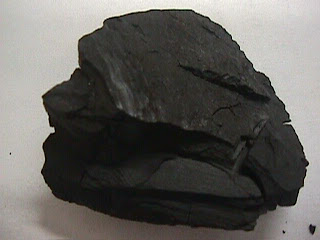
clement asked today how much energy do we use just for the bandwidth on the Internet. I started by finding the biggest, blackest picture of coal I could find.

It is often claimed that it takes a pound of coal to deal with every 2 megabytes of data. This includes creating the data, moving it around, and storing it.
This comes from a 1999 study called "The Internet Begins With Coal" (which I can't seem to find on the Internet), but was revised in 2002 by Johnthan Koomey and associates down to maybe 10 or 20 megabytes. Unfortunately, that number is also five years and millions of new computers old as well. Since this is the best data I can find my answer is same the as Jack Nicholson's in A Few Good Men - I don't have the first damn clue.

I'll tell you what I do know; everyone has a worldview on how much energy use is ok, and a lot of people start with the worldview of their childhood. Here's what I remember; three hour trips in the car on Sunday for no purpose except to drive around; throwing out everything in big black bags; setting army soldiers on fire with gallons of leaded gasoline just for the fun of it. Energy was plentiful and free. And when that green army man plastic melted it smelled cool too, like war.

And so it is with computers now. We live the high life with all this so-called free IT; three year cycles, mass emailing movies, animated screensavers, leaving our machines on 24/7. Except, as Nick Carr points out, that it's not free anymore. Really, aren't we just living out the giddy, vicarious thrills of wasting that we learned in childhood? So when we hear that each computer uses 1.8 tons of raw materials, it's a bummer. When we hear that Avery Lovins reported on energy efficient computing in 1993, we don't care. And when we hear that the Chinese recycle copper wires by pouring gasoline on them to burn away the insulation, we think good for them. Because we are reminded of our childhood. Because melting plastic is cool. And, as Robert Duvall said in Apocalypse Now, it smells like victory.


Tuesday, January 23, 2007

Mail Bag

I got hundreds of comments on the "Black Google" post. First, thanks for posting. I'm sorry I couldn't get back to every person individually.

The comments ranged from the thoughtful and the funny to the sublime and bitter. Many gave advice on how to fix the numbers so that they were more accurate, which was obviously needed, thanks. Some were adamant on the idiocy of the whole concept, repeatedly posting their message multiple times on multiple forums (see Tireless Rebutter for an explanation of the meme.). Others thought it had something to do with the racial disposition of the Google staff, and at least one person proposed "Black Google" for the title of the next Quentin Tarantino movie. If that happens, I want a cut.

The ones I liked best were those that took the idea and ran with it - the two guys who actually did some testing; the one who proposed some alternative color schemes using navy, maroon, and green, which only use one more watt than black; the stylish extension for Firefox; the guy who ran right out and made the interface, the guy who made a religious site based on a misspelling on the previous interface. Ha ha, all very clever.

Many people tried to justify the white background in a variety of ways, some valid, some questionable, and some just weird. One guy said he regularly worked with all the lights off and used the white screen to light the room. Many thought that the black screen would be depressing to users, or ugly, and a few justified it because the heat generated warmed the room! I didn't know Google, the monitor makers, or the planet were particularly interested in the heating business at this point in time. Some thought that turning off your monitor and 'taking cold showers' were better ways to save energy, suggesting that somehow the amount of energy one could save was finite in nature.

Finally, there were lots of mathematicians out there who shovelled out facts and figures, many of which were no better than my first estimate e.g. 95 percent of all monitors out there are LCDs, Google would lose half their business going to a black screen, making the switch would only save .00001 % of the US energy consumption. Of the ones that were valid, most concluded that it was a waste of time, that a few hundred thousand dollars was nothing. I guess I can only respond by saying that I'm sorry I'm working outside your framework for change; would you prefer gas rationing, and the worldwide riots that will come with it? Personally, I like society pretty much as it is, more or less; I wish something would match my socks up when they come out of the laundry, but I realize we have to change a few things. And if we reject spending a few days pondering a simple change that will save .00001 % of the energy in America, maybe a lot more, then I'm wondering what we are going to consider. Because doing nothing will end up in violence.